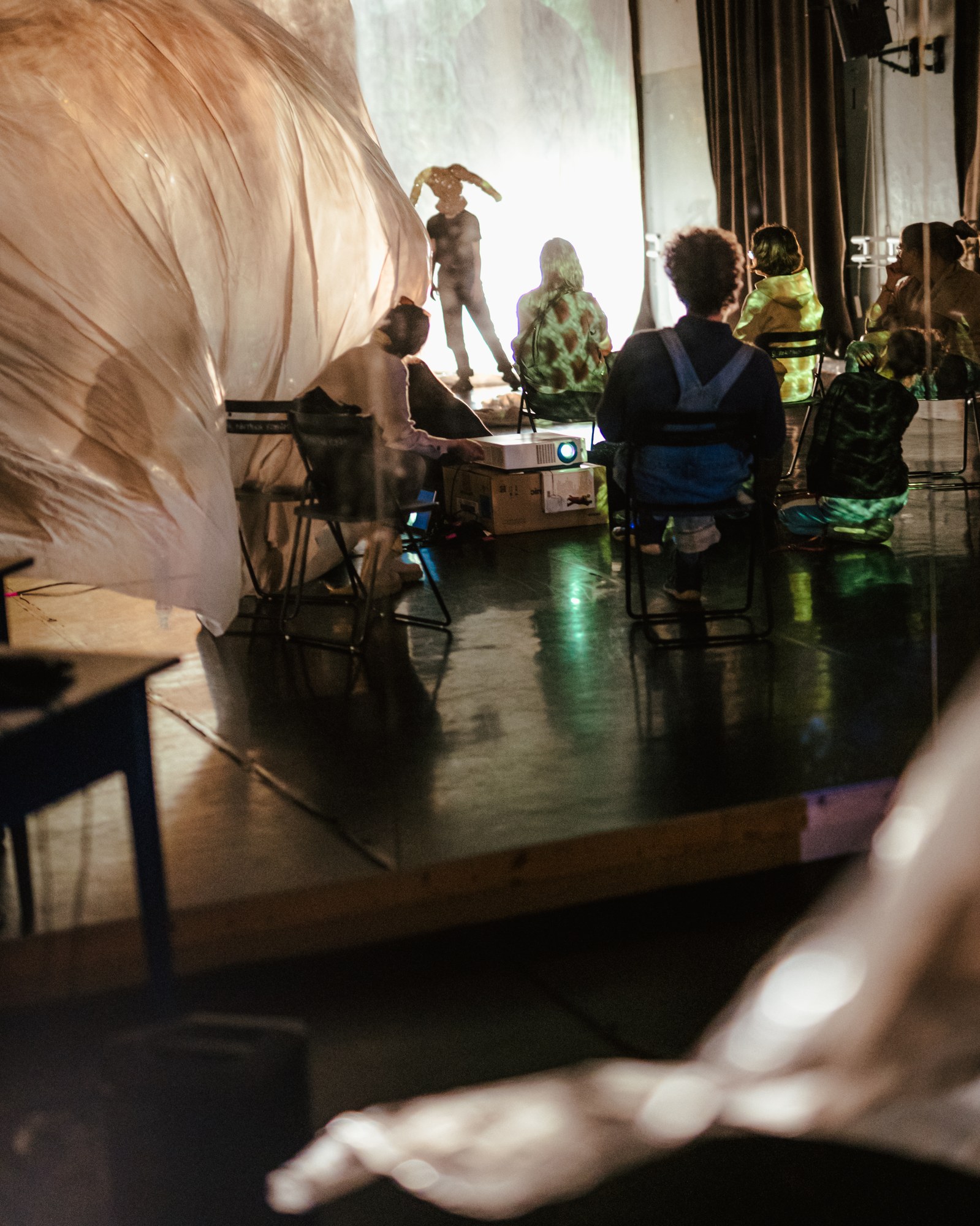
Zsófia Szász frequently works in collaborative partnerships. She maintains long-term artistic collaborations with Irene Plaque, the ICODACO Forgó collective, and the Szünet Ensemble.
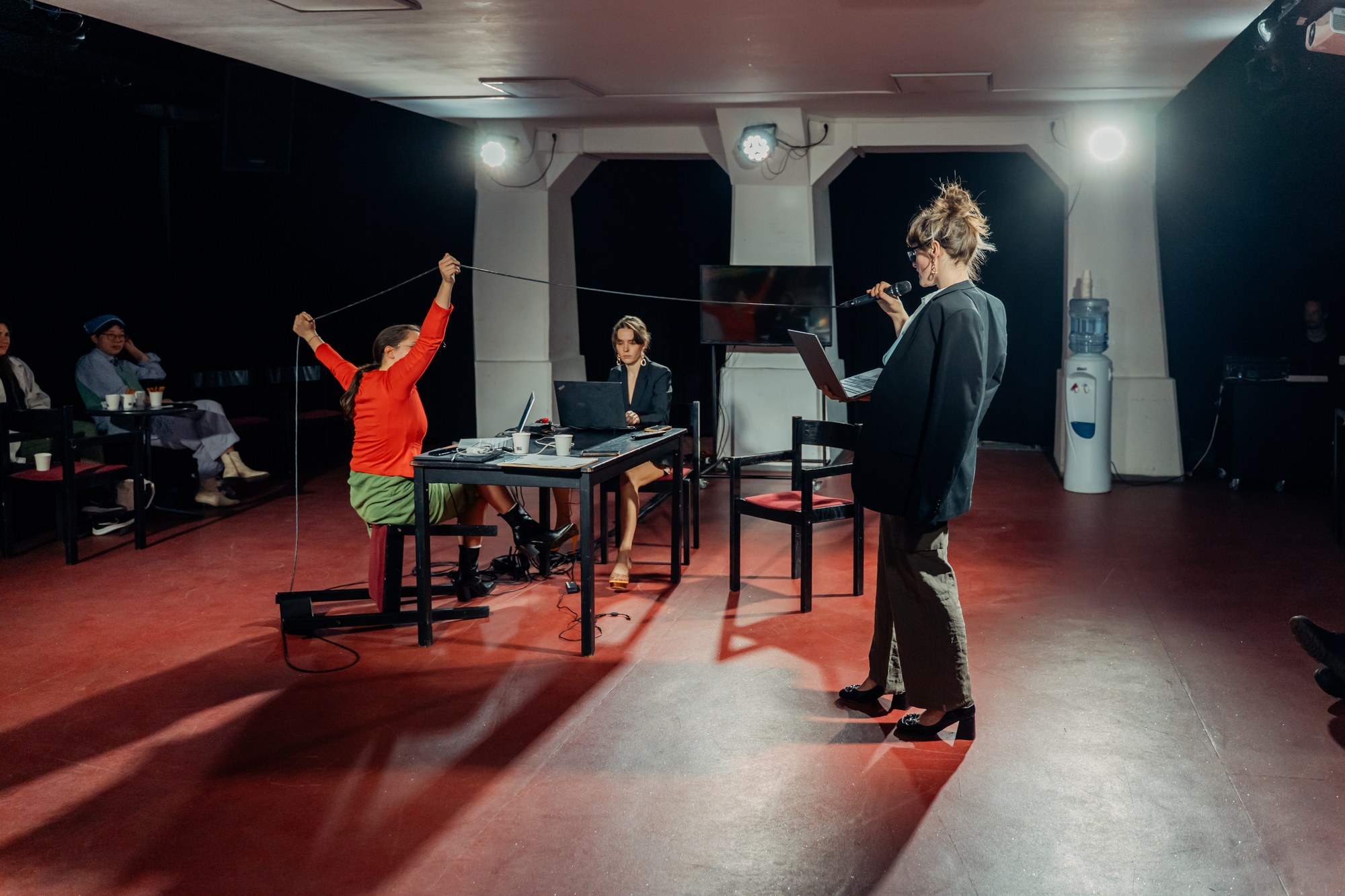
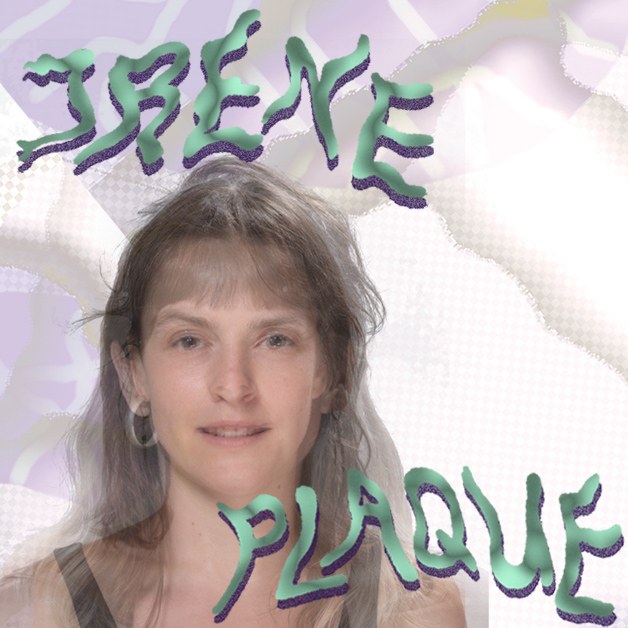
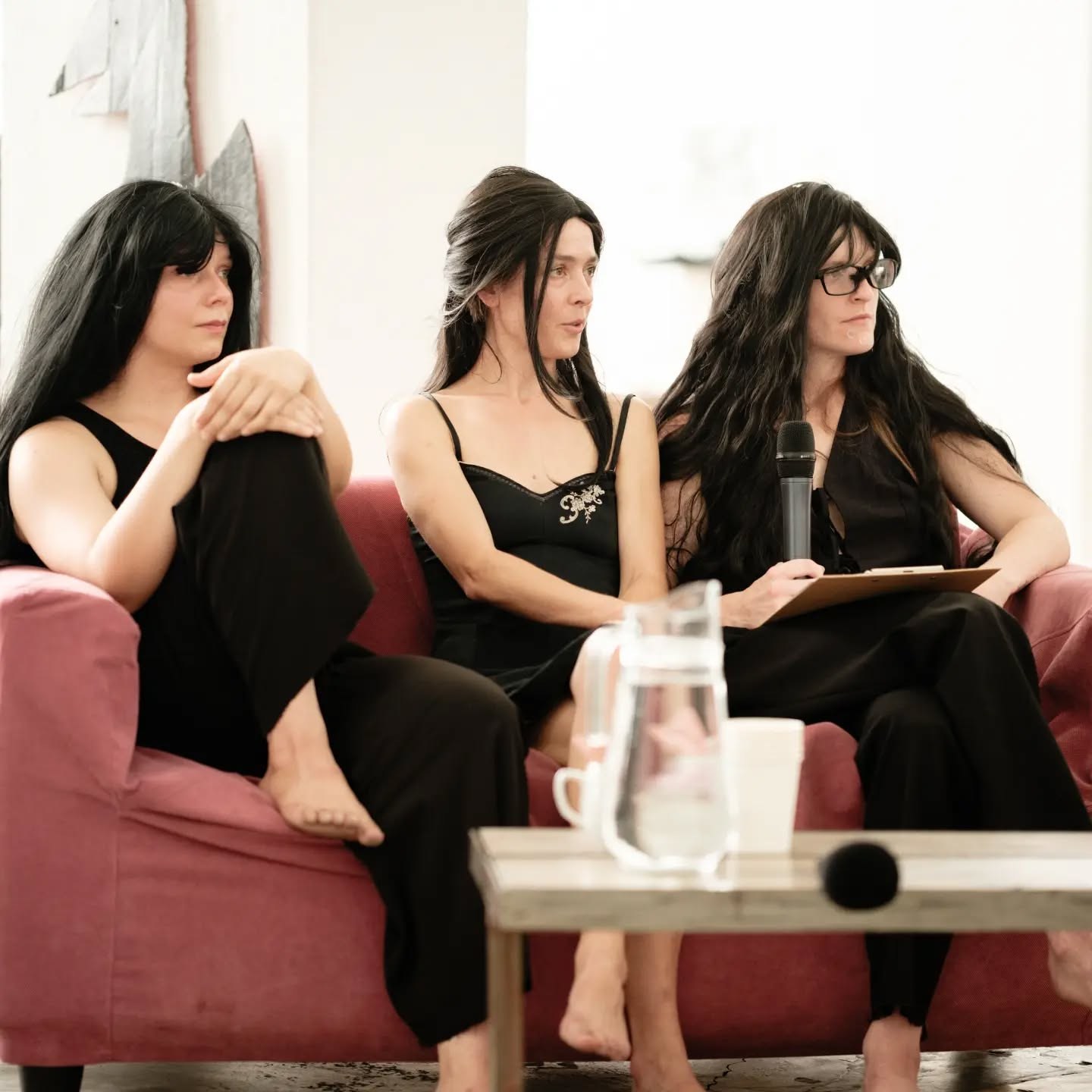
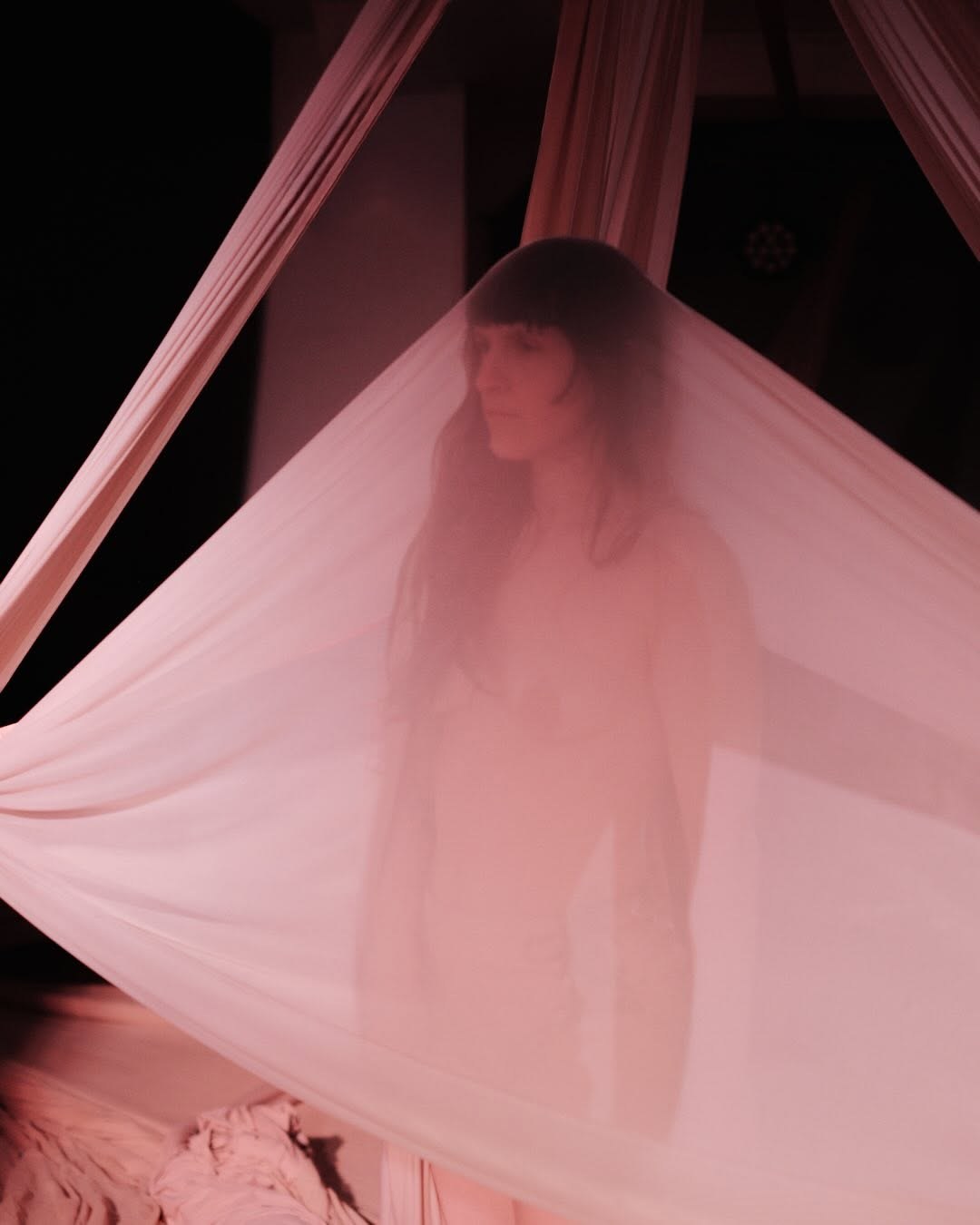
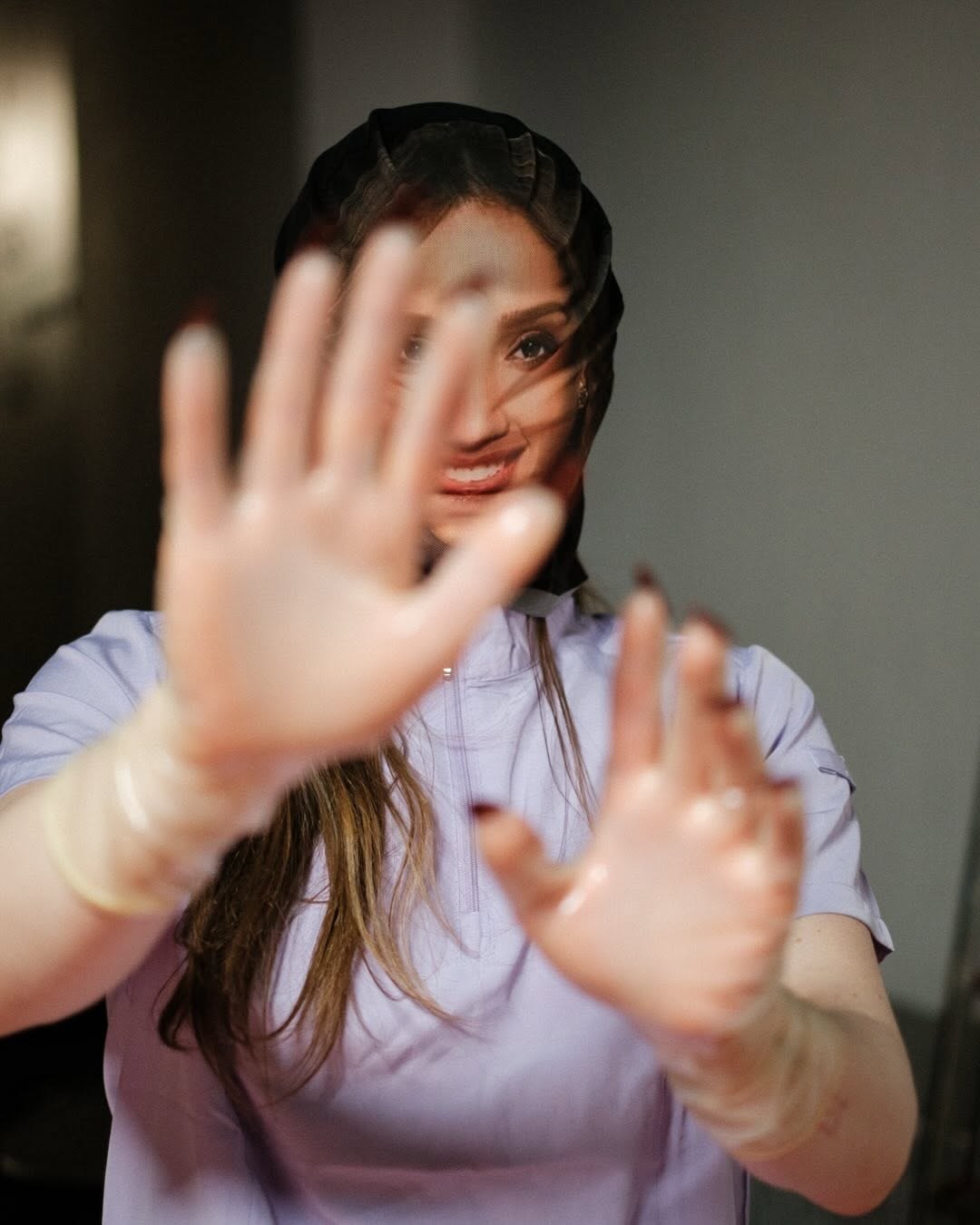
Irene Plaque is the jointly created fictional persona of Alja Branc Barbossa, Katalin Bitó, and Zsófia Szász. The three of them are one person: Irene Plaque. Irene Plaque is a Budapest-based Hungarian–Slovenian artist reimagining contemporary dance, choreography, and theatrical space.
Their collaboration stems from shared human, economic, and artistic needs. They prioritize human-scale, sustainable creative processes, collective responsibility, and pushing the boundaries of theatrical genres.
Acca Horváth and Zsófia Szász first met as dancers in the production Miracle. They noticed that although their bodies possessed completely different external structures, they shared an identical suppleness and physical responsiveness. They joined forces to discover what these two bodies could become together: what their bodies desire to evolve into, what they wish to articulate, and why. From this research emerged Interior Story.
Interior Story explores the objectification of a body striving for perfection. Slipping into the skins of two pieces of furniture, Attila Horváth and Zsófia Szász examine what meaning objects carry today, and how two "pieces of furniture" — two bodies — can relate to one another. What becomes of the body once its aspirations reach their peak and it must confront the fact: it cannot become better than itself?
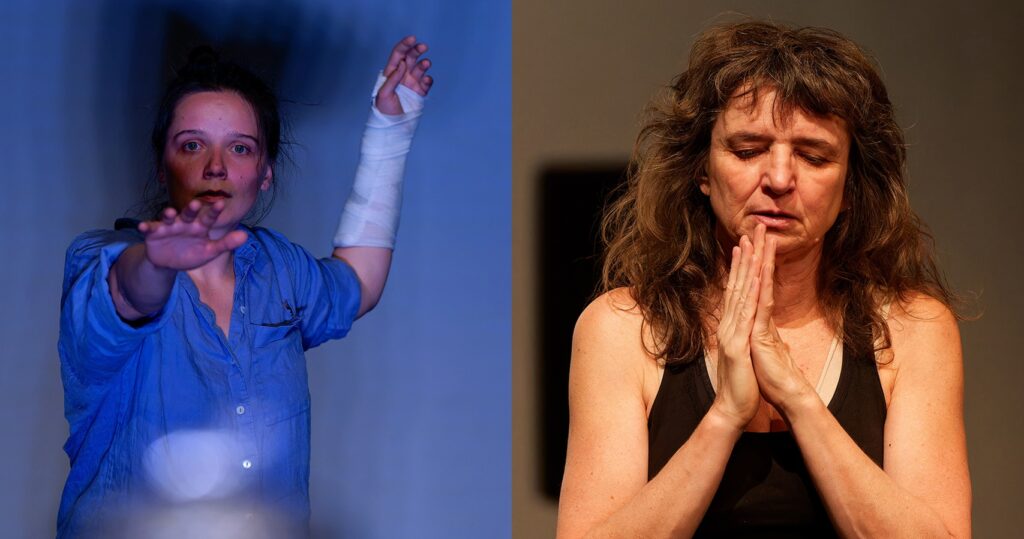
A 57-year-old woman who, three years ago, put her independent company on hold — a company she had built from nothing and led for 20 years — and who now does not know what to do with herself in this World: what to do with her knowledge, her desire to create, her ageing, her longing for an inspiring yet homely community, the losses and depression of the past 16 years, the sense of a futurelessness that has seeped under her skin, and the ruins left behind after the NER, now that this might finally be the moment to act. And there is also her bewildering passion for contemporary dance, and her conviction that contemporary dance is a political statement.
A 27-year-old female dancer and creator whose career is just beginning. A woman who longs to be seen, heard, and recognised. Who primarily wants to dance, but also wants to create and express herself in any other way possible. She wants to be welcomed into the World, yet her body and soul do not conform to the expected norms. Her desire for connection and her lived experience of loneliness are constantly in conflict with one another. She wants to heal and to heal others, to smooth things over, to investigate, and to understand deeply. She is curious, honest, sensitive, uncertain — and while she anxiously chases her future, she dreams that contemporary dance will conquer humanity.
And the place: Hungary, where contemporary dance belongs among the endangered art forms — condemned to extinction by the previous cultural policy. A country where, over the past 16 years, many things that the two women believe in have been eroded: a value system based on professional standards, recognition of the power of inner motivation and curiosity, free and independent thinking, a culture of debate, transparency, and the practice of supporting statements with facts and arguments. A country now filled with hope, doubt, and impatience.
In November 2025, Réka Szabó invites Zsófia Szász to help her bring order to her thoughts, her heart, and her professional past, to reflect, through dance, on the turmoil she currently finds herself in. They begin to talk, through words, dance, drawing, and creation. The duet of the two women, through their personal revelations and curiosity, becomes a constantly evolving, living imprint of the contemporary world and of the role of art within it. The performance offers an insight into their present-tense thinking through an experimental language of form. For Zsófi, beyond the act of creation itself, this collaboration is about experiencing a sense of community that reaches across generations. For Réka, it may represent the possibility of starting again, entering into dialogue with younger generations, and the beginning of building a new creative environment, as part of her programme Rendrakás (Putting Things in Order).
“There is an angel in it: the mutual attention of these two dancing bodies conveys a depth of trust rarely witnessed on contemporary stages.”